COA - Trung tâm Nông nghiệp Hữu cơ
WORKSHOP "SUSTAINABLE AGRICULTURE DEVELOPMENT ASSOCIATED WITH BIODIVERSITY: FROM THE ROOTS OF DEN HUNG FOREST TO A GREEN FUTURE"
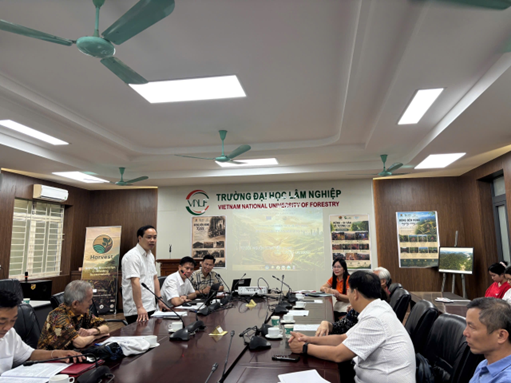
Within the framework of the HARVEST Project funded by the European Union, on May 21, 2026, the Vietnam National University of Forestry (VNUF) organized the “Sustainability Awareness Day” under the theme: "Sustainable agriculture development associated with biodiversity: From the roots of Den Hung forest to a green future"
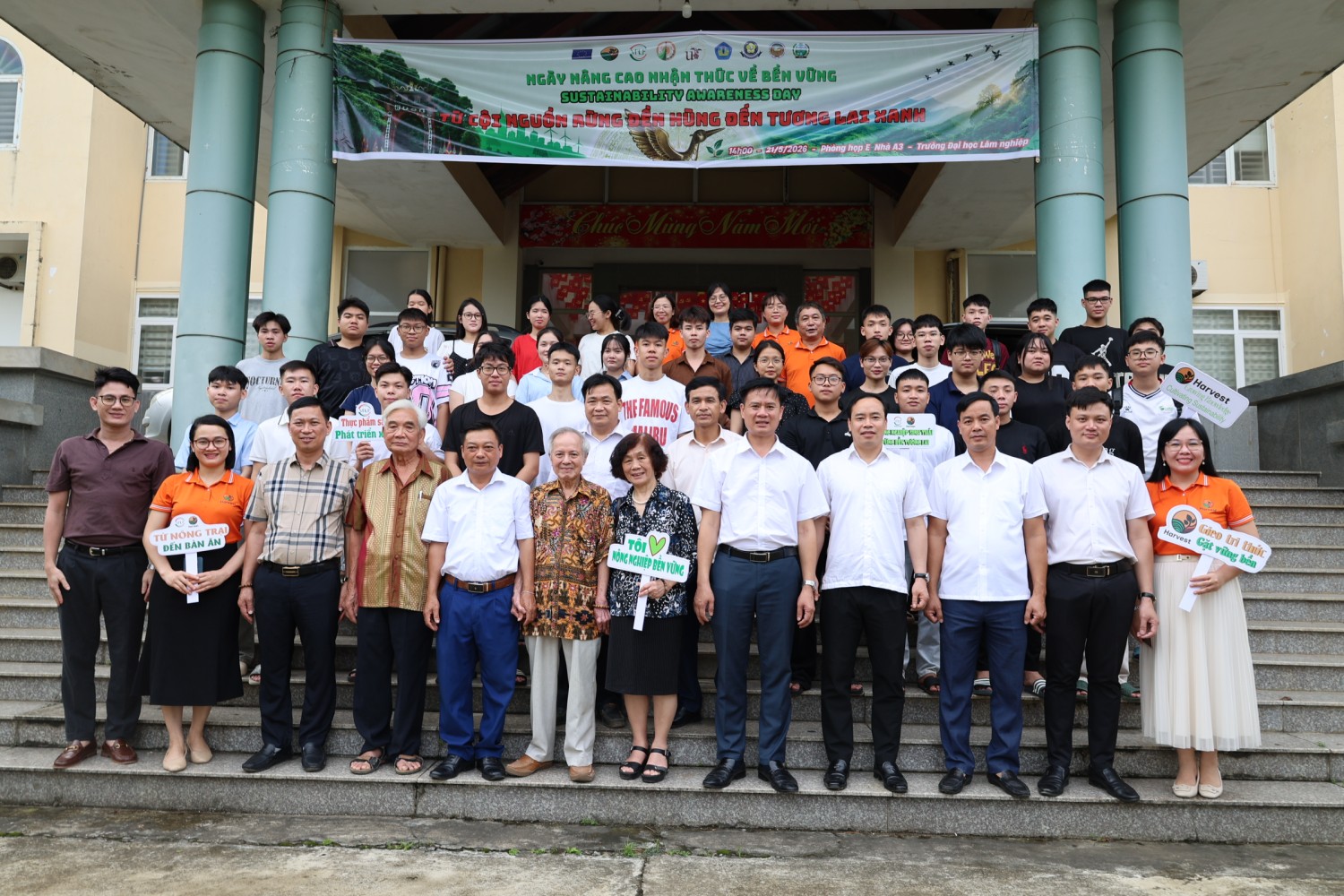
The workshop was co-chaired by Assoc. Prof. Dr. Phung Van Khoa, Vice Rector of VNUF, and Dr. Nguyen Ba Long, Dean of College of Land Management and Rural Development
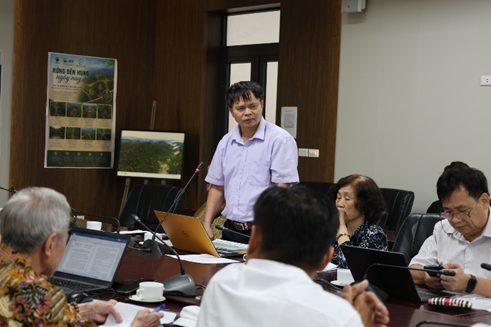
Assoc. Prof. Dr. Phung Van Khoa, Vice Rector of VNUF
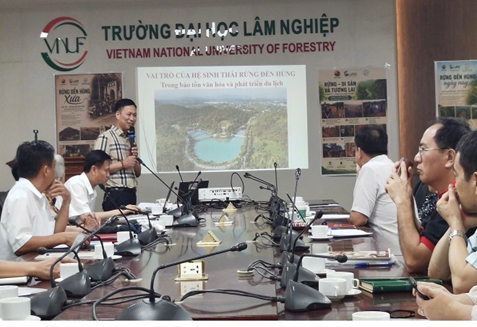
Dr. Nguyen Ba Long, Dean of College of Land Management and Rural Development
Dr. Nguyen Ba Long, Dean of College of Land Management and Rural Development
Participants included People’s Teacher Dr. Nguyen Dinh Tu, former Rector of VNUF; Dr. Do Duc Bao , Head of the Independent Advisory Team for Den Hung Tropical Forest Ecosystem Restoration Project; Prof. Dr. Hoang Van Sam , Head of International Cooperation Department; Assoc. Prof. Dr. Vu Huy Dai , Head of Science and Technology Department; Assoc. Prof. Dr. Dao Chau Thu from the Vietnam Soil Science Society; representatives from the Faculty of Forest Resource and Environmental Management; and the Faculty of Forestry; together with lecturers, staff, employees, and students of the College of Land Management and Rural Development.
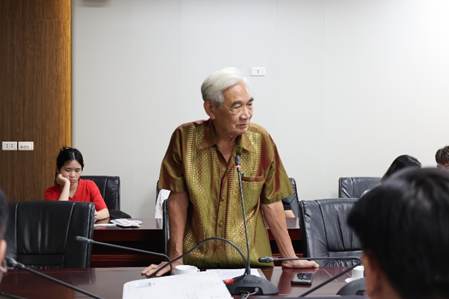
People’s Teacher Dr. Nguyen Dinh Tu, former Rector of VNUF
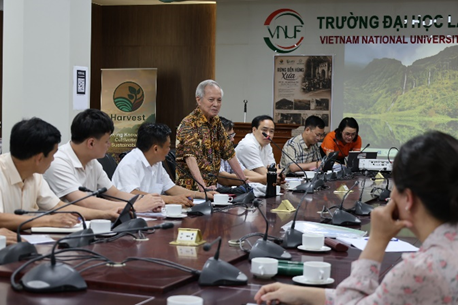
Dr. Do Duc Bao, Head of the Independent Advisory Team for Den Hung Tropical Forest Ecosystem Restoration Project
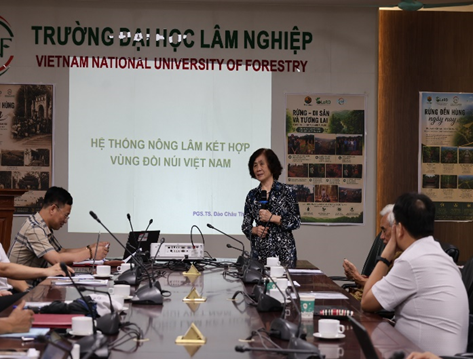
Assoc. Prof. Dr. Dao Chau Thu from the Vietnam Soil Science Society
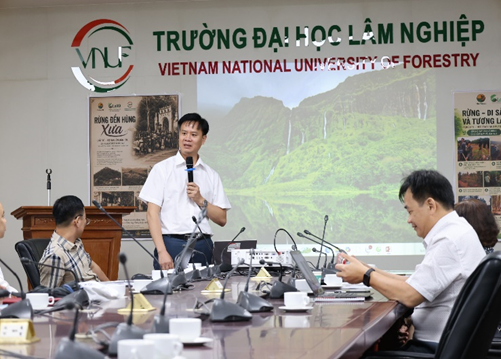
Prof. Dr. Hoang Van Sam, Head of International Cooperation Department
Dr. Do Duc Bao, Head of the Independent Advisory Team for Den Hung Tropical Forest Ecosystem Restoration Project
Assoc. Prof. Dr. Dao Chau Thu from the Vietnam Soil Science Society
Prof. Dr. Hoang Van Sam, Head of International Cooperation Department
In his opening remarks, Dr. Nguyen Ba Long emphasized the critical role of forests in the development of Vietnam’s wet-rice civilization, describing forests as a natural “ecological infrastructure” that protects soil, water resources, and climate, while serving as the foundation for sustainable agriculture. He affirmed that: “There can be no sustainable agriculture without sustainable forest ecosystems.”
Scientific presentations at the workshop highlighted the outstanding values of the Den Hung forest ecosystem in cultural preservation, biodiversity conservation, and sustainable ecotourism development. According to reports presented at the workshop, the Hùng Temple National Forest currently covers approximately 538 hectares and contains a rich special-use forest ecosystem comprising 636 plant species belonging to 429 genera and 144 families; 59 bird species, 13 mammal species, 14 reptile species, 9 amphibian species, and 157 insect species. Many rare and valuable species, such as Aquilaria crassna (agarwood), Nageia fleuryi, Afzelia xylocarpa, Pterocarpus macrocarpus, together with an over-800-year-old Cycas tree, are being conserved in this area.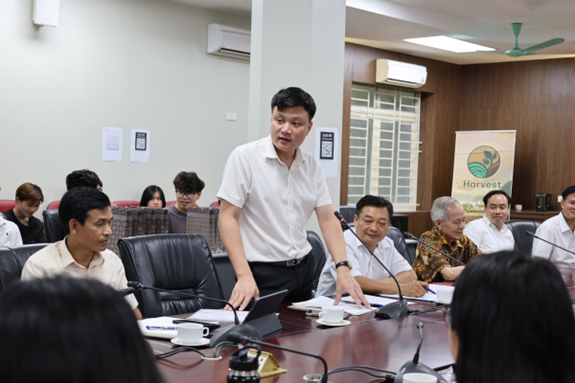
Scientific presentations at the workshop highlighted the outstanding values of the Den Hung forest ecosystem in cultural preservation, biodiversity conservation, and sustainable ecotourism development. According to reports presented at the workshop, the Hùng Temple National Forest currently covers approximately 538 hectares and contains a rich special-use forest ecosystem comprising 636 plant species belonging to 429 genera and 144 families; 59 bird species, 13 mammal species, 14 reptile species, 9 amphibian species, and 157 insect species. Many rare and valuable species, such as Aquilaria crassna (agarwood), Nageia fleuryi, Afzelia xylocarpa, Pterocarpus macrocarpus, together with an over-800-year-old Cycas tree, are being conserved in this area.
Mr. Dao Duy Tung – Representative of Den Hung Historical Relic Site, delivered a presentation
Mr. Pham Tien Dat – Director of Den Hung Historical Relic Site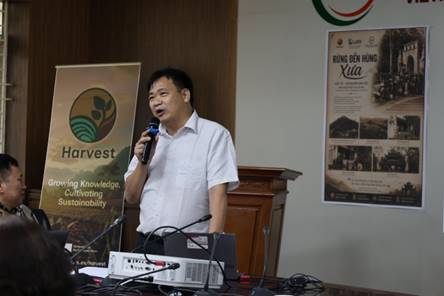
Assoc. Prof. Dr. Do Anh Tuan – Faculty of Forest Resources and Environmental Management
Mr. Pham Tien Dat – Director of Den Hung Historical Relic Site
In addition to positive achievements, experts also pointed out several challenges in the management and restoration of Den Hung forest ecosystem. Some areas previously planted with Acacia and Eucalyptus plantations have reduced the regeneration capacity of native tree species
Workshop participants emphasized the need to better understand the concept and multifunctional values of forests in order to establish appropriate policies for forest conversion to other land-use purposes. They proposed accelerating the transition toward multilayered and multispecies forest ecosystems; prioritizing indigenous tree species; strengthening the application of science, technology, and digital transformation in forest resource management and monitoring; ; and resolving land clearance issues related to forest lands previously allocated to households, thereby creating sufficient space for restoring the Den Hung forest ecosystem and improving the landscape of the historical site in accordance with approved planning schemes.
Many presentations emphasized the role of agroforestry models in the buffer zone of Den Hung and the midland and mountainous ecological regions across the country in contributing to forest protection, erosion control, soil health improvement, and livelihood enhancement for local people. According to experts, the agroforestry model not only helps increase land cover, retain water, and protect biodiversity but also creates sustainable livelihoods through the combination of forestry trees, agricultural crops, livestock, and ecotourism.
The workshop also acknowledged the significant contributions of multiple generations of forestry scientists and VNUF in the process of restoring the Den Hung tropical forest ecosystem from the 1990s to the present. The green forests around Nghia Linh mountain today are not only the result of nature but also the crystallization of science, social responsibility, and love for the nation's roots.
Workshop participants emphasized the need to better understand the concept and multifunctional values of forests in order to establish appropriate policies for forest conversion to other land-use purposes. They proposed accelerating the transition toward multilayered and multispecies forest ecosystems; prioritizing indigenous tree species; strengthening the application of science, technology, and digital transformation in forest resource management and monitoring; ; and resolving land clearance issues related to forest lands previously allocated to households, thereby creating sufficient space for restoring the Den Hung forest ecosystem and improving the landscape of the historical site in accordance with approved planning schemes.
Many presentations emphasized the role of agroforestry models in the buffer zone of Den Hung and the midland and mountainous ecological regions across the country in contributing to forest protection, erosion control, soil health improvement, and livelihood enhancement for local people. According to experts, the agroforestry model not only helps increase land cover, retain water, and protect biodiversity but also creates sustainable livelihoods through the combination of forestry trees, agricultural crops, livestock, and ecotourism.
The workshop also acknowledged the significant contributions of multiple generations of forestry scientists and VNUF in the process of restoring the Den Hung tropical forest ecosystem from the 1990s to the present. The green forests around Nghia Linh mountain today are not only the result of nature but also the crystallization of science, social responsibility, and love for the nation's roots.
Assoc. Prof. Dr. Do Anh Tuan – Faculty of Forest Resources and Environmental Management
Through the workshop, the Vietnam National University of Forestry and the HARVEST Project aim to spread the message: protecting the forest means protecting the nation's cultural roots, protecting soil health, and securing the ecological foundation for the country's sustainable future development. Simultaneously, the goal is to promote connections between the university, scientists, enterprises, the Management Board of Den Hung Historical Relic Site, Forest Management Boards, and the community in the journey to build a green, circular, and climate-resilient agro-forestry sector.
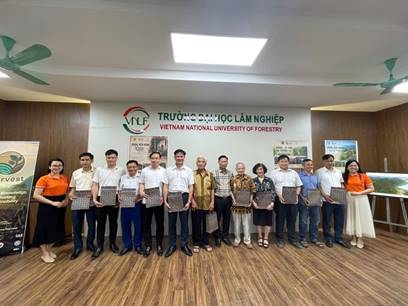
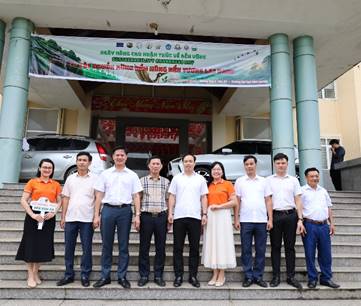
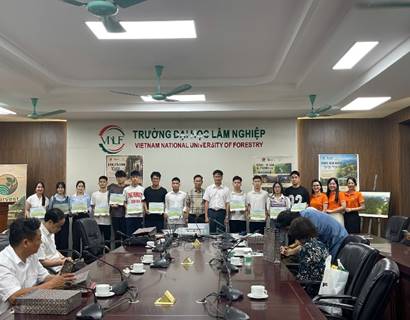
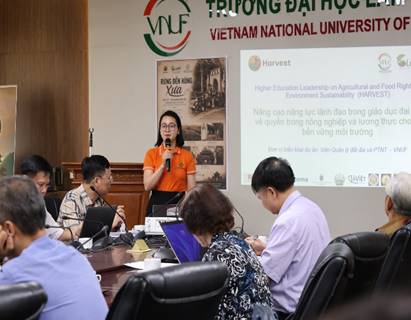
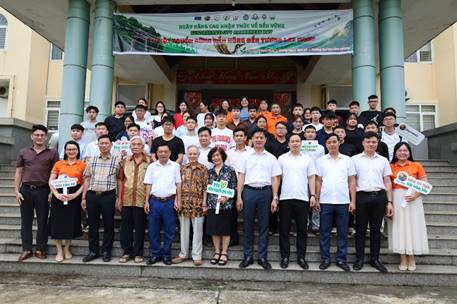
Some photos from the workshop:
 |
 |
 |
 |
 |
|
Source: College of Land Management and Rural Development
Ý kiến bạn đọc
Bạn cần đăng nhập với tư cách là Thành viên chính thức để có thể bình luận
Những tin mới hơn
Những tin cũ hơn
Thăm dò ý kiến
Tin xem nhiều
-
 KỸ THUẬT TRỒNG CÂY DÂU TÂY THEO PHƯƠNG PHÁP HỮU CƠ
-
 KỸ THUẬT PHA CHẾ THUỐC BOOCĐÔ 1% (BORDEAUX)
-
 NÔNG NGHIỆP HỮU CƠ – ĐÃ THAY ĐỔI CUỘC ĐỜI TÔI
-
 PGS - Hệ thống chứng nhận tin cậy cho sản phẩm hữu cơ
-
 QUY TRÌNH TRỒNG CẢI BÓ XÔI HỮU CƠ
-
 RUỒI LÍNH ĐEN - MỘT GIẢI PHÁP TỰ CHỦ PHÂN BÓN CHO NÔNG NGHIỆP BỀN VỮNG
Bài mới đăng
-
 Trung tâm Nông nghiệp hữu cơ (COA) tham gia xây dựng bộ tài liệu: Đào tạo Giảng viên nguồn (TOT) về Nông nghiệp sinh thái (NNST): Các nguyên tắc và thực hành chuyển đổi hệ thống lương thực, thực phẩm
-
 KẾT NỐI THỊ TRƯỜNG – THÚC ĐẨY TIÊU THỤ SẢN PHẨM RỪNG VÀ TRANG TRẠI CHO CÁC HỢP TÁC XÃ, TỔ HỢP TÁC
-
 TỔ CHỨC TẬP HUẤN TOT: “NÔNG NGHIỆP HỮU CƠ VÀ HỆ THỐNG ĐẢM BẢO CÙNG THAM GIA (PGS) CHO CÁC BÊN LIÊN QUAN TRONG SẢN XUẤT RỪNG VÀ TRANG TRẠI TẠI CÁC TỈNH MIỀN NÚI PHÍA BẮC VIỆT NAM”
-
 TẬP HUẤN NÂNG CAO NĂNG LỰC VỀ THỰC HÀNH NÔNG NGHIỆP THÔNG MINH, LỒNG GHÉP QUẢN LÝ RỦI RO THIÊN TAI VÀ GIỚI TẠI TỈNH LÀO CAI
-
 TẬP HUẤN NÂNG CAO NĂNG LỰC VỀ NÔNG NGHIỆP THÔNG MINH THÍCH ỨNG VỚI KHÍ HẬU TẠI ĐẮK LẮK VÀ GIA LAI
-
 WORKSHOP "SUSTAINABLE AGRICULTURE DEVELOPMENT ASSOCIATED WITH BIODIVERSITY: FROM THE ROOTS OF DEN HUNG FOREST TO A GREEN FUTURE"